




Mary Ann McGuigan’s stories have appeared in The Sun, Massachusetts Review, and many other journals. Her collection PIECES: A Novel in Stories includes fiction named for the Pushcart Prize and Best of the Net. That Very Place, her new story collection, is described as “a deeply moving descent into the human heart and all its conflicts.” Her creative nonfiction is published widely, most notably in Brevity, The Rumpus, and The Citron Review. The Junior Library Guild and the New York Public Library rank her novels as best books for teens, and Where You Belong was a finalist for the National Book Award. A graduate of St. Peter’s College, Mary Ann has made her living as an English teacher, a business writer, and a financial editor, mainly for Bloomberg L.P.
Follow Along:
- Website
- Buy That Very Place
- Buy PIECES: A Novel in Stories
- Buy Where You Belong
- “The Facts of Life, Irish and Unabridged” (CNF) in Brevity
- “Beloved” (from That Very Place), Prime Number Magazine
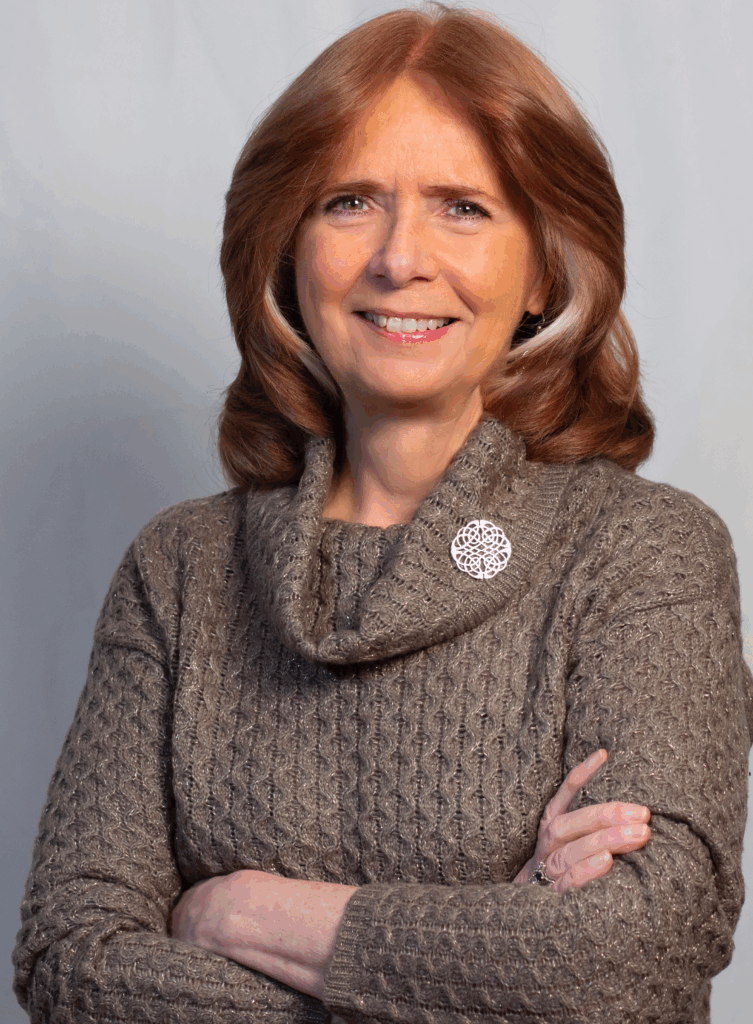
We have been impressed by your work since we published your short story “Holy Night” in December of 2022. Your work has found homes with some very notable publications, including The Sun, SmokeLong, and Massachusetts Review, and we are so pleased that we have also been able to house your work. With such a full publishing history, we were very interested to hear that, in your own words, you have had a “late-to-the-game” publishing journey, with your first novel being published when you were 45 years old. Could you share with us what brought you to writing, and what the journey of becoming a writer was like for you?
Yes, my first novel came out in 1994, but I had been writing since childhood. Our homelife was plagued by alcoholism and extreme poverty. It was a bit of a war zone. Writing became my means of escape. As early as eight or nine I was writing poetry and plays and stories. I became the egghead in a blue-collar family so I learned to keep my writing a secret. The biggest obstacle for me was the feeling that my writing just wasn’t good enough. That conviction continued for years despite encouragement from teachers and even after I first began to have essays and short stories published in the mid-1980s. In my twenties, I didn’t allow my writing the time and attention it deserved, mainly because I was so self-conscious about it. In my thirties, I was raising a family and working full-time. As my 40th birthday approached, I still hadn’t finished a novel. I felt as if I’d abandoned a lifelong dream. That’s when I buckled down. I had two children by then, and a very demanding job, so I wrote on commuter trains and at Little League fields and in conference rooms and just about anywhere I could steal a few minutes to myself. I finished Cloud Dancer intending it as a kind of coming-of-age novel for adults. But Scribner’s published it as YA. That was fine with me.
Where do you find the most inspiration for your work?
I grew up in a big Irish-American family—I was the sixth of seven children—and my siblings were colorful and comical, especially when they were all together. As a kid I paid close attention to how they responded to the family’s craziness. Things could be unpredictable and funny and painful, sometimes all at the same time. I’ve often borrowed from my memories of them and the experiences we shared. Their courage was inspiring, even when they had to dig deep to find it.
Many of us have dreams of becoming authors, and have to pursue other careers to survive. You were an English teacher for almost a decade as well as a business and finance editor at Bloomberg. How do you feel these careers inspired or hindered your progress into becoming a writer?
I didn’t think anything could be more demanding than teaching English. Then I spent nearly ten years as a communications consultant, a creative job, but it involved lots of traveling and lots of ornery clients. Working at Bloomberg was just as demanding but the opportunities to try new things seemed unlimited. Between work and raising a family, writing rarely got top billing. It was a tough trade-off but I had a family to support so I didn’t think I had much choice. Still, the people I got to know—the high school kids, the fussy clients, the financial wizards—all offered me opportunities to “study” people in all their mysterious ways. None of that goes to waste when you’re faced with the blank page.
You have a total of six published books thus far– four novels, a novel in stories, and a recent short story collection. Could you share with us your experience with writing both short stories and full novels? When do you know a story you are wanting to tell is meant to be a short or long form? What would you say are the biggest differences in your process when writing, and what are the biggest difficulties and benefits that you find in each form?
I love short stories. As difficult as they are to do well, they usually begin to take on a manageable shape before you’re ready to tear your hair out. Novels—and their characters—have a mind of their own. Tell them to go left, and they’ll go right just to make you miserable. Completing a novel is very satisfying, but when I start one, I have to be dragged in kicking and screaming. I’ve written them only after I’ve exhausted every other possible way of resolving a character’s situation. Each of my novels began as a short story. And each time, I’d wonder what became of the character after the story’s ending. I’d lie awake worrying. That’s the point of no return. That’s when I have to follow wherever it leads.
You also write both fiction and creative non-fiction. How do you approach these two genres similarly or differently in terms of your process? Do you feel that the themes that you explore in your creative non-fiction are reflected in your fiction work, or vice versa?
Nearly all of my creative nonfiction is memoir, usually with the aim of recreating a particular event. I try to capture the people and places as vividly as I can, although memories can be elusive. What winds up on the page reads very much like fiction. I avoid exposition. It weakens the impact for the reader. So my memoir pieces read very much like flash fiction. But memoir is more difficult to write than fiction, where you can add a detail or action that helps the story do what you want it to. In memoir you don’t have that luxury. I have to stay true to the events as they happened and as I would have understood them at that time.
These memoirs are nearly all from the point of view of a child or a teenager. Sometimes when I’m writing them, I’m reminded of the “headspace” I adopt for young adult fiction. Somehow I’ve always been able to remember what the world felt like for me as a child, how confusing and mystifying it can be.
As for the themes explored, yes, there are common threads. My fiction—both YA and adult—often touches on alcoholism and poverty and the troubles associated with them. My creative nonfiction necessarily explores some of the same issues.
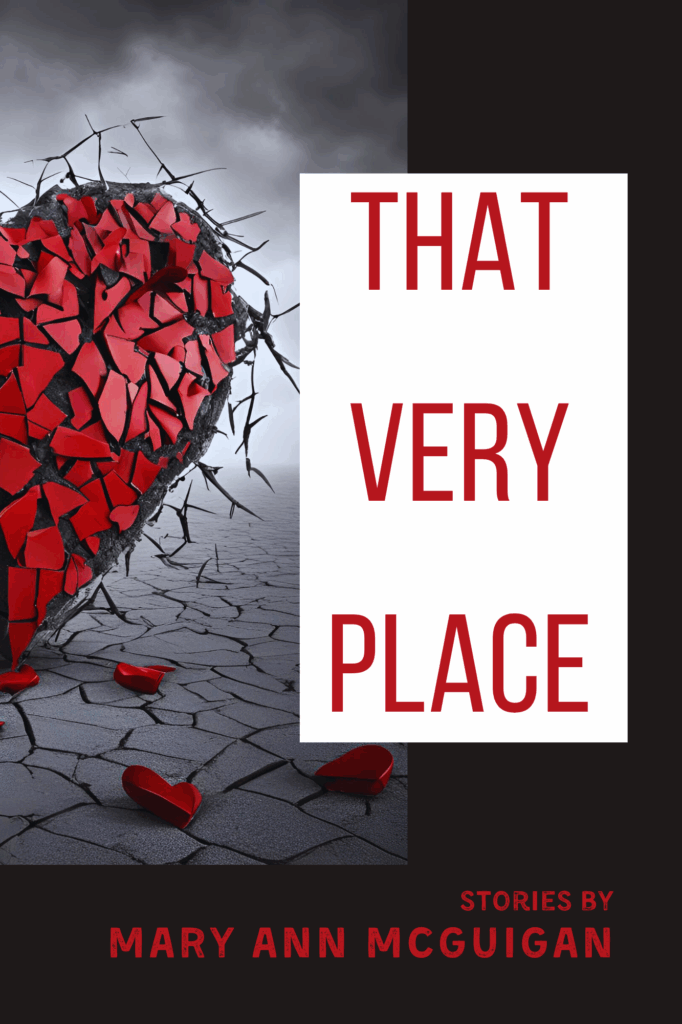
As briefly mentioned previously, you recently published a short story collection titled That Very Place. Congratulations! Would you be willing to share with us what the book is about and a bit about the process of bringing it all to the page?
The new collection has some new stories along with others that I wrote quite a while back. As I considered which stories might work together for a collection, I saw that many of the settings in my stories were unusual, familiar but somehow off-kilter, like a wedding in a Laundromat or a convenience store with shelves nearly bare. Likewise, the main characters’ lives are off-kilter. The stories that made the cut all had that in common: familiar places laced with something unruly, unlikely situations in which people are bound by unbreakable connections—an unwanted child, an unloving parent, or the ache of what could have been.
Which book would you say was the most challenging for you to write and why?
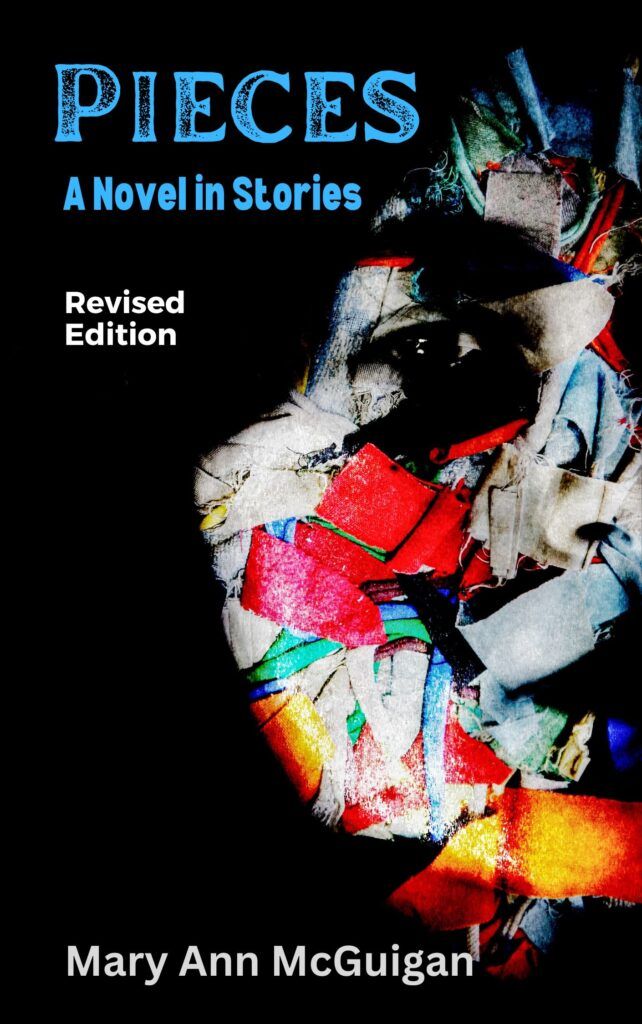
Pieces: A Novel in Stories was the most difficult because the stories are linked in terms of both plotline and characters. So a change in one story would necessitate a change in several others. The age of the main character, who’s featured in most of the stories, spans more than twenty years over the course of the book, as do the ages of her siblings, who are also prominently featured in key stories (one in “Holy Night,” by the way). Each story stands on its own but ultimately had to conform to the direction of the action as a whole.
What advice would you give to someone who wants to become an author or get their work published with literary magazines?
First, sit down and write, even if it’s only fifteen minutes a day. Second, develop a thick skin and keep submitting. I meet so many writers who’ve written a solid story, but they hesitate to take it the rest of the way. They don’t submit their work to journals. You have to learn not to take rejection personally. It’s just part of the process. Getting a novel published is more difficult, but here too I think writers give up too easily. Self-publishing should be a last resort, only after you’ve revised and revised and revised.
What are your goals for your writing career moving forward? Are there any particular projects you have in mind that you are excited to bring to life?
Yes, I have two projects underway. The first is a memoir in essays. It’s a collection of about forty brief, creative nonfiction pieces that capture important moments in my life, beginning at about age seven to my first day in college. The launch of That Very Place has taken up a great deal of time, but once things settle down, I’ll be reviewing the collection to determine what changes the manuscript needs.
The second is a young-adult novel. I finished it a long while ago but I never found a publisher for it. It’s about sexual abuse, and I’ve always suspected it might have been too far off the beaten path for some editors. So much of YA now is predictable and unchallenging. Anyway, I’ve dusted it off and made some important changes, but the core of the story remains the same. So we’ll see.
As a literary magazine, we have to ask: which short stories and/or books would you consider to be your top 5 favorites?
Tops on my list these days is anything by Donal Ryan, an Irish writer. Heart, Be at Peace, his new novel, has won all kinds of prizes, including Irish Book of the Year.
I’m also a huge fan of Colm Toibin, Anne Enright, and Roddy Doyle. I’ll read anything Alice McDermott writes, I think Andre Dubus’s work is brilliant, and I wish Hilary Mantel was still with us.
Finally, what media/music/miscellany have you been loving lately?
I’m a creature of habit when it comes to music, so there’s Bonnie Raitt and everyone else is a distant second. But Billie Eilish has my attention.


